
High up in the misty Central Highlands of Sri Lanka lies a wilderness unlike any other on the island. Horton Plains National Park is a surreal, windswept plateau characterized by rolling montane grasslands and dense cloud forests. It is an environment that feels both ancient and untamed.
For nature lovers and adventure seekers, this UNESCO World Heritage Site is an absolute must-visit destination. The crisp, cool air provides a refreshing contrast to the tropical heat of the coastal regions. It is a place where nature reigns supreme, offering a profound silence broken only by the whistling wind and rustling wildlife.
The absolute crown jewel of this protected reserve is the dramatic escarpment known as World’s End. Standing at the very edge of this precipice, visitors are rewarded with a view that seems to stretch into infinity. This comprehensive guide will help you meticulously prepare for the ultimate hiking experience in Horton Plains National Park.
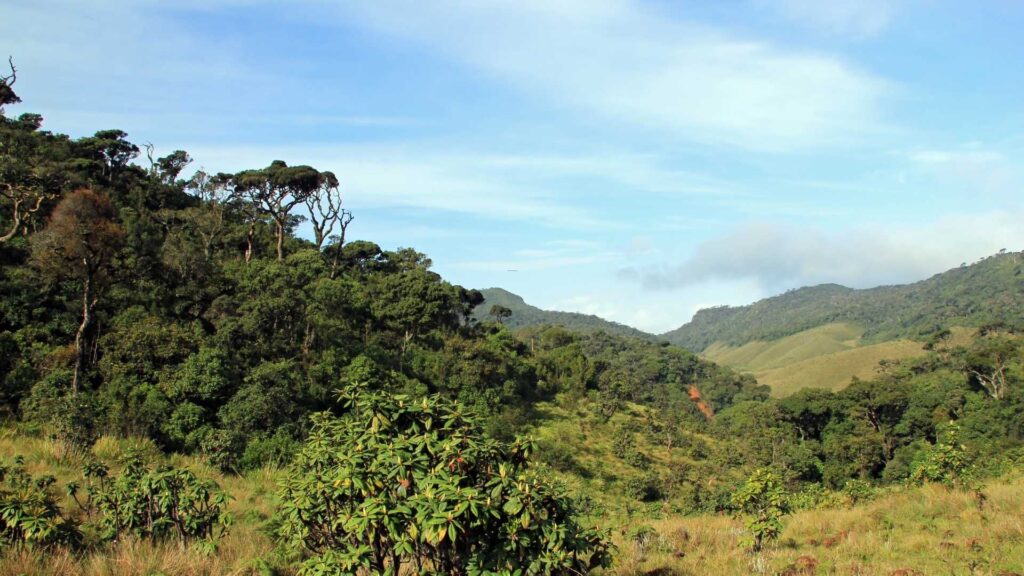
Horton Plains National Park sits proudly at an altitude of over two thousand one hundred meters above sea level. This unique and lofty elevation creates a distinct microclimate and an ecosystem that supports a remarkable variety of flora and fauna. In fact, many of the plant and animal species found here are completely endemic to Sri Lanka and exist nowhere else on Earth.
As you begin your early morning trek, you will notice the landscape constantly shifting between open savannahs and dark, moss-draped forests. The twisted branches of native Rhododendron trees, adorned with vibrant red blossoms, add brilliant splashes of color to the otherwise verdant surroundings. It is a hauntingly beautiful environment that effortlessly captivates photographers and hikers alike.
Beyond its visual appeal, the park is also the most crucial watershed in the entire country. The misty plains serve as the primary source for several major waterways, including the Mahaweli River, Kelani River, and Walawe River. Protecting this pristine environment is therefore absolutely vital for the ecological balance and agricultural survival of the entire island.
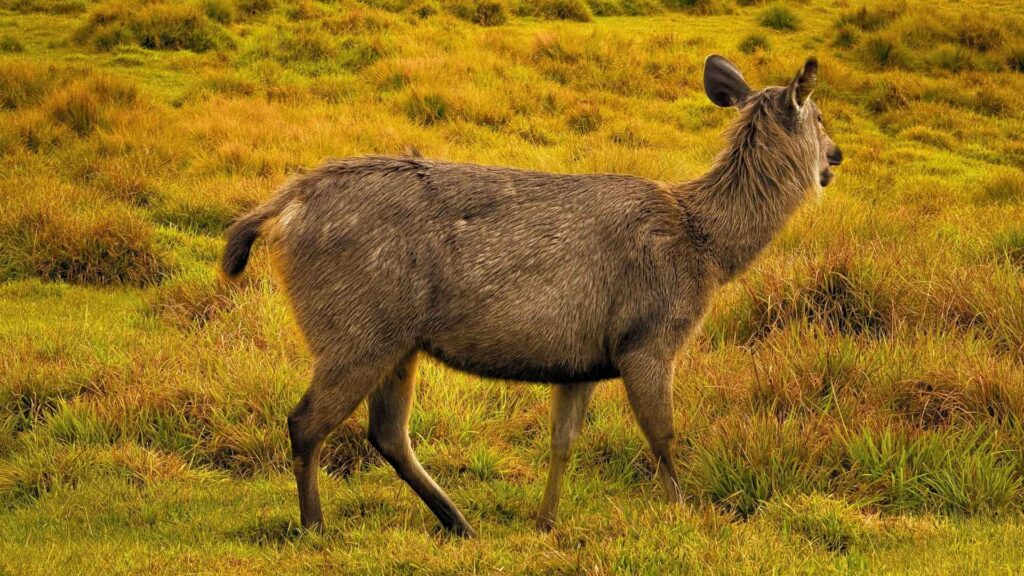
While Horton Plains is not a traditional jeep safari destination like the parks in the dry zone, wildlife sightings are practically a guarantee. The most prominent and visible residents are the magnificent Sri Lankan Sambar deer. These large, gentle creatures are incredibly accustomed to human presence and are often seen grazing peacefully near the park entrance and along the grassy trails.
Birdwatchers will quickly find themselves in a true highland paradise. The park is a vital sanctuary for elusive endemic bird species such as the Sri Lankan Whistling Thrush, the Yellow-eared Bulbul, and the Sri Lanka Bush Warbler. Keep your binoculars handy and your footsteps remarkably light to spot these feathered treasures hidden in the dense undergrowth.
Though rarely seen by the average hiker, the apex predator of these sweeping plains is the Sri Lankan Leopard. They are incredibly shy animals and typically avoid human contact, moving silently through the dense cloud forests. Even if you do not spot one, simply knowing they roam these highlands adds an exciting element of wildness to your trek.
Other fascinating creatures inhabit the park, including the endemic Bear Monkey, also known as the Purple-faced Langur. These primates sport thick coats to survive the chilly highland temperatures. You might also spot giant squirrels leaping through the forest canopy as you approach the woodland sections of the trail.
The famous hike through Horton Plains is a circular loop covering approximately nine and a half kilometers in total. The trail itself is well-defined, relatively flat, and entirely suitable for anyone with a moderate level of physical fitness. Along this rewarding route, you will encounter three major natural attractions that define the park.
Before reaching the main attraction, the trail naturally leads you to a spot called Mini World’s End. This is the first significant viewpoint along the massive escarpment. It offers a spectacular vertical drop of about two hundred and seventy meters down to the valley floor.
Mini World’s End serves as a thrilling appetizer for the grandeur that is to come. It provides a sweeping view of the lush valley below and the distant, meticulously planted tea estates. Many hikers use this scenic spot to catch their breath and take their first panoramic photographs of the southern plains.
Continuing further along the winding trail, you will finally arrive at the legendary World’s End. Here, the plateau suddenly plunges off a sheer, rocky cliff, dropping nearly a thousand meters straight into the valley beneath. The sheer scale and suddenness of the precipice are guaranteed to leave you in absolute awe.
On a perfectly clear day, the sweeping view is nothing short of miraculous. You can gaze all the way to the southern coastline, looking past toy-like villages, terraced tea plantations, and dense, dark forests. However, this magnificent vista is highly dependent on the weather and, most importantly, the time of day.
It is crucial to note that there are absolutely no safety railings or guardrails at the edge of the cliff. Visitors must exercise extreme caution at all times. Never step too close to the edge for a photograph, and always stay mindful of sudden, powerful wind gusts that frequently sweep across the plateau.
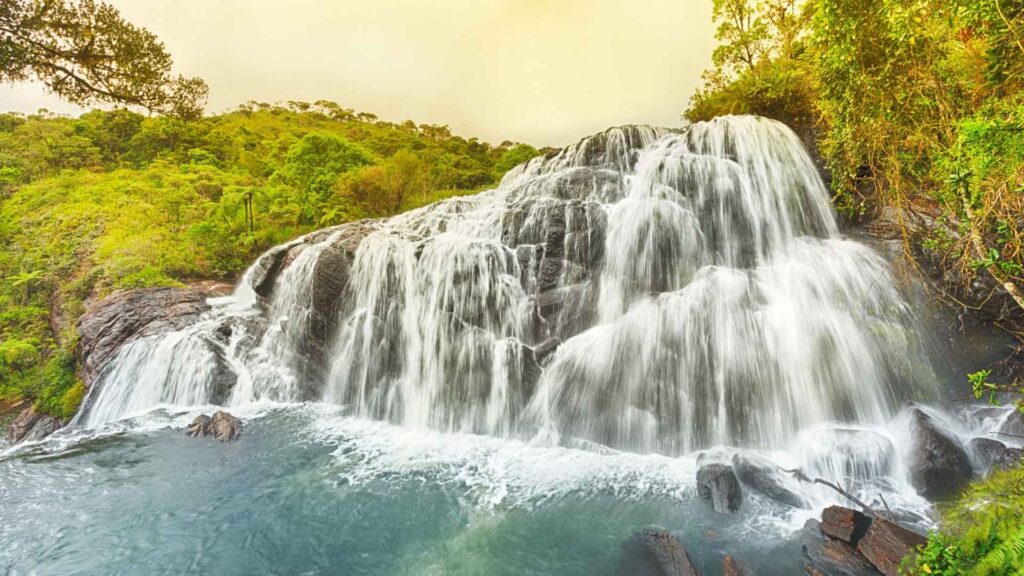
After leaving the steep cliffs behind, the hiking trail descends gracefully into a more heavily forested area. The soothing sound of rushing water will eventually lead you straight to Baker’s Falls. This wide, cascading waterfall is named after the renowned British explorer Sir Samuel Baker, who frequented these plains.
The icy water tumbles dramatically over a series of dark rock steps, completely surrounded by giant tree ferns and lush montane vegetation. It is a wonderfully cool and shaded spot to relax, eat a snack, and rest your legs before tackling the final stretch of the hike. The stark contrast between the open, sunny cliffs and this enclosed, misty waterfall adds wonderful variety to the journey.
Visiting Horton Plains National Park requires careful forethought and an exceptionally early start. Because the park is situated in a remote, high-altitude location, logistics play a massive role in the overall success of your trip. Understanding the travel times, transportation methods, and pacing will ensure a stress-free and enjoyable experience.
Most international travelers choose to base themselves in the charming, cool-climate town of Nuwara Eliya. Known for its old-world colonial architecture and sprawling tea estates, it is the most convenient and well-equipped hub for this excursion. From Nuwara Eliya, the drive to the park entrance takes roughly an hour to an hour and a half.
Alternatively, the tiny, picturesque railway village of Ohiya offers a closer, albeit much quieter, starting point. It is ideal for independent travelers who prefer to stay far off the beaten path in simpler accommodations. Regardless of where you decide to stay, you must arrange your early morning transportation the night before your hike.
The single most important rule for visiting World’s End is to arrive as early as humanly possible. The park gates officially open at six in the morning, and you should aim to be waiting in line right when they open. The primary goal is to reach the World’s End viewpoint well before nine in the morning.
As the tropical morning progresses, thick white mist and heavy clouds rapidly roll up from the warm valley below. By mid-morning, the dramatic drop-off is almost always completely shrouded in an impenetrable blanket of white fog. If you arrive too late, you will be staring at a solid wall of white rather than a sprawling, panoramic landscape.
There are no public buses or trains that travel directly to the park entrance. You will absolutely need to hire a private vehicle to navigate the steep, winding, and sometimes degraded mountain roads. Your tour operator or accommodation host can easily arrange a reliable vehicle and an experienced driver for you.
Private cars and sturdy jeeps offer the most comfortable and warmest ride up the mountain in the freezing pre-dawn hours. Tuk-tuks are also a popular and budget-friendly choice for the adventurous, but the early morning drive will be incredibly cold, windy, and bumpy. Whichever option you ultimately choose, ensure your driver is booked to wait at the car park to safely bring you back down.
Horton Plains National Park is one of the most strictly protected environmental zones in all of Sri Lanka. The Department of Wildlife Conservation goes to great and necessary lengths to preserve this highly fragile ecosystem. As a responsible visitor, it is your duty to adhere strictly to all park rules without exception.
The entire park is a designated plastic-free zone, and this critical rule is heavily and manually enforced. At the main entrance, park rangers will carefully search every single bag and backpack. They will confiscate all forms of single-use plastic before you are allowed to pass through the gates.
You must remove the plastic labels from your water bottles before arriving at the ticket counter. Processed snacks cannot be carried in their original plastic wrappers; they must be transferred into paper bags or reusable containers beforehand. By respecting these vital rules, you actively contribute to keeping the highlands pristine for future generations.
The extreme high altitude means the weather in Horton Plains is vastly different from the coastal regions of Sri Lanka. Mornings are bitterly cold, while mid-day can become intensely sunny and quite hot. Packing the right gear is absolutely essential for your comfort and safety on the trail.
The entire nine-and-a-half-kilometer walking loop usually takes about three to four hours to complete at a leisurely, comfortable pace. The trail is intuitively designed to be walked in a clockwise direction. When you reach the first major fork in the path shortly after the entrance, always take the route bearing to the left.
Heading left ensures you reach Mini World’s End and the main World’s End viewpoint as quickly as possible. This smart strategy maximizes your chances of beating the rising mist and enjoying the clear views. Once you have enjoyed the viewpoints, you can afford to take your time strolling peacefully through the forest toward Baker’s Falls.
Remember to walk quietly and avoid shouting to significantly increase your chances of spotting the endemic birds and shy wildlife. Take frequent, short breaks to fully appreciate the profound silence and the unique flora surrounding you. This hike is not a race to the finish line, but rather an unparalleled opportunity to immerse yourself in one of the world’s most unique ecological wonders.
Exploring Horton Plains and World’s End is a transformative journey that will stay with you long after you leave the island of Sri Lanka. The brutally early wake-up call and the chilly mountain air are incredibly small prices to pay for the breathtaking rewards. Prepare well, respect the wilderness, and get ready to be utterly amazed by the majestic roof of Sri Lanka.